 HOME
HOME
Sub-theme1
Cursive Script from Ming China Transmitted to Joseon
Calligraphy in Cursive Script
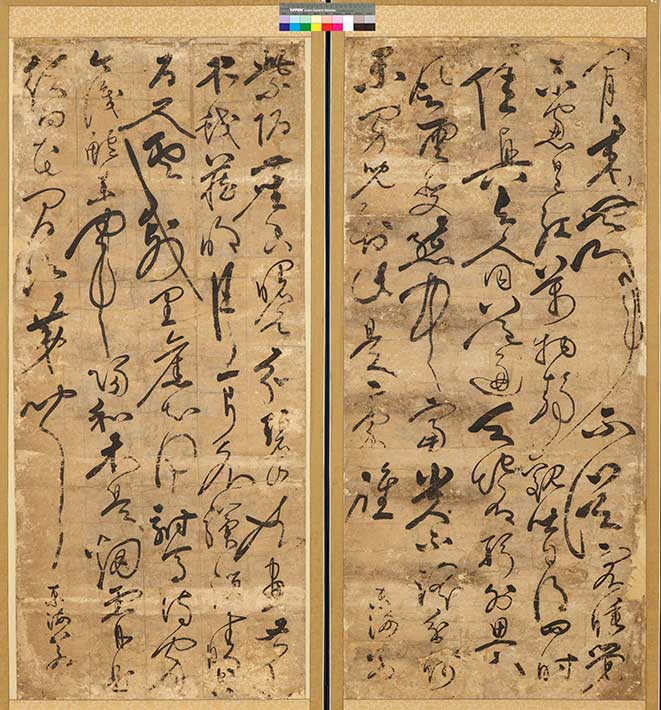
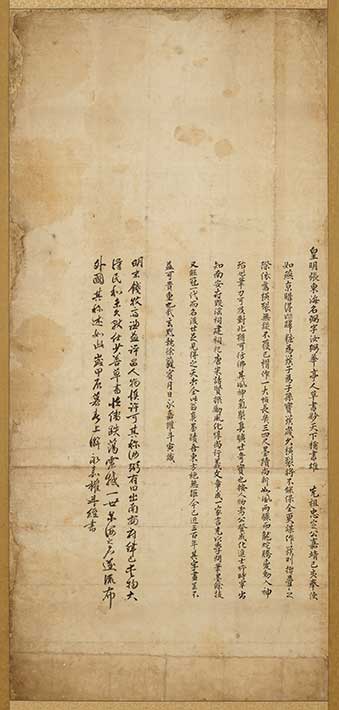
- Zhang Bi (1425–1487)
- Ming Dynasty, 15th century, China
- Ink on paper
- Private Collection (Entrusted to Chungjae Museum)
- Treasure
This folding screen of cursive script is an important example showing the introduction of the calligraphic style of Zhang Bi(1425–1487), known by his pen name Donghaiweng (Old Man of the Eastern Sea), into Joseon Korea. The work was passed down within the family of the scholar-official Kwon Beol (1478–1548). This work exemplifies the dynamic and ever-changing qualities of cursive script, with striking variations in brushstrokes and the bold use of long, diagonal lines that impart a strong sense of movement. Zhang Bi’s distinctive style had a significant influence on prominent sixteenth-century Joseon calligraphers, including Kim Gu (1488–1534) and Hwang Giro (1525–after 1575).
 Prev
Prev
